Dubai Weekly
When Apple debuts the next generation of iPhones this week, they’re likely to come with an unwanted change: a higher price tag. A price hike from the supply-chain powerhouse would be the clearest sign yet that soaring memory costs have become unavoidable — with no end to the memory crunch in sight. Call it ‘chipflation’ or ‘RAMageddon.’ The shortage is reversing a decades-long decline in memory costs that helped make consumer electronics more powerful without making them dramatically more expensive.
The terms ‘memory prices’ and ‘memory shortage’ appeared in 473 company transcripts last quarter, according to data provided by AlphaSense. The entire industry is seemingly working on the problem. Yet, we’re years away from seeing it fixed.
The common wisdom is that AI is at fault: The technology isn’t just contributing to higher energy prices and layoffs; it’s also helping drive up the cost of everything from smartphones to game consoles. But the shortage was brewing well before ChatGPT took off—and was then amplified by AI’s unending hunger for RAM. The current market is the product of a complicated and very profitable reshuffling of the memory industry within a system that was already failing to keep up.
‘We need to build more wafer capacity,’ Manish Bhatia, president and COO of Micron—one of the three largest memory manufacturers—told The Verge. ‘It’s a very different challenge for the industry than it had been for many years before, where technology alone was able to keep up with the demand.’ For years, memory manufacturers could increase production by fitting more chips onto each wafer. But those gains were shrinking and taking longer to achieve.
In 2021, even as pandemic-era electronics demand surged, Micron concluded that the problem was more fundamental: Technological advances alone would no longer create enough capacity to keep pace with long-term demand. Manufacturers would have to process more wafers—and build enormous new facilities to do it. Then the memory business collapsed.
Pandemic-era purchases of computers, tablets, and phones had pulled demand forward; consumer spending weakened, and manufacturers were left with excess inventory. They lost money and slowed their expansion plans. By the time the market began recovering, generative AI had unleashed a wave of demand far larger and more memory-intensive than manufacturers had ever anticipated.
The memory business is also extraordinarily concentrated. Three manufacturers account for about 90 percent of the market, according to Counterpoint, leaving the world dependent on a handful of companies to divide limited capacity between AI infrastructure and consumer devices. Counterpoint estimates that Samsung controlled 39 percent of the memory market in the second quarter of 2026, followed by SK Hynix at 26 percent and Micron at 25 percent.
The memory inside your phone or computer broadly falls into two buckets: DRAM, or dynamic random-access memory, temporarily holds the information a device needs while opening apps, loading webpages, or running software. NAND flash memory provides longer-term storage for things like photos and files. ‘It’s not as simple as saying data centers are consuming RAM.
The RAM is not the same.’ Inside AI data centers, specialized processors rely heavily on a form of DRAM called high-bandwidth memory, or HBM. ‘The RAM is not the same,’ David Naranjo, associate director at Counterpoint, told The Verge. ‘By stacking memory chips together and using advanced connections and packaging, HBM can move enormous quantities of data to and from those processors much faster and more efficiently.’ It’s more difficult to produce, but also more lucrative to sell.
Deep-pocketed AI chipmakers like Nvidia and AMD and tech giants like Meta and Microsoft have an insatiable need for it to power their AI systems—and are more than happy to pay. HBM also consumes significantly more manufacturing capacity than conventional DRAM. Memory chips are made many at a time on large, circular silicon wafers.
Because a finished HBM product stacks multiple, larger chips together, it requires considerably more silicon. Micron estimates that producing a given amount of HBM requires roughly three times as many wafers as producing the same amount of conventional DRAM. The incentives increasingly favor AI.
Rather than guessing how many phones or laptops will sell a year from now, memory makers can lock in multiyear commitments from some of the world’s richest companies. ‘We have been engaging in discussions with customers, prioritizing those who can guarantee committed future captive demand,’ Jaejune Kim, Samsung’s executive vice president of memory, said on the company’s last earnings call. AI is also increasing demand for conventional DRAM.
Phone and PC makers want to run smaller AI models directly on their devices, requiring more sophisticated conventional memory—and more of it. Future models may need substantially more memory than their predecessors to support those capabilities. ‘The three big memory guys, they’re just basically allocating the capacity that they have to these companies.’ As AI spreads across various services such as search, coding, and productivity tools, the scope of demand is widening from a memory perspective, said Song Hyun-jong, president of SK Hynix.
‘We are witnessing a structural shift in demand where both AI memory and conventional memory are growing together.’ Samsung and Micron have both said they remain committed to conventional DRAM. Micron’s Bhatia told The Verge that it still accounts for most of the company’s wafer capacity. But limited supply, surging demand, and AI customers willing to make long-term commitments have made it extraordinarily lucrative to cede space to HBM.
SK Hynix posted a record 76 percent operating margin last quarter, up from 41 percent a year earlier, while Micron’s adjusted gross margin hit a record 85 percent. Samsung’s semiconductor profits, meanwhile, jumped roughly 250-fold from a year earlier. ‘It’s more profitable,’ Naranjo said.
‘The three big memory guys, they’re just basically allocating the capacity that they have to these companies.’ Counterpoint estimates that DRAM prices for smartphones increased roughly 56 percent in the first quarter of 2026 compared to a quarter earlier, and grew around 83 percent in the second quarter. For 16GB of DRAM for a smartphone, Counterpoint estimates that it cost roughly $42 in the second quarter of 2025 and about $181 a year later—an increase of more than 300 percent. Those aren’t necessarily Apple’s prices—few companies have more leverage with suppliers—but the figures show how dramatically the component costs of building a high-end phone have changed.
The obvious solution is to make more memory. The problem is that it takes years to accomplish—even if you’re working fast. Micron is currently demonstrating just how much work ‘more’ entails.
In July, the company poured the first concrete for its planned manufacturing complex near Syracuse in upstate New York. Once completed, the site will contain 2.4 million square feet of cleanroom space, making it the largest semiconductor manufacturing site in US history by that measure—and Micron’s largest facility anywhere in the world. Those cleanrooms where the chips are made will occupy only a fraction of the entire build, which is roughly the size of 350 football fields.
‘By the time we’re done, we’ll have built probably 15 to 20 million actual square feet of building space to support the 2.4 million square feet of cleanroom,’ Bhatia told The Verge. In one of Micron’s fab designs, the cleanroom occupies just one floor of a five-story building. Micron doesn’t expect meaningful output until 2030.
Even on an accelerated timeline, the journey from permitting to production will have taken roughly six years. The company’s new Idaho fab is further along and is expected to begin wafer output in mid-2027. Micron is spending enormous amounts to move the process along more quickly, roughly doubling its capital expenditure from a year earlier to exceed $25 billion this year.
Even with that investment, Micron can’t identify a clear point at which supply will catch up because demand continues to grow almost as quickly as manufacturers can expand. ‘We’ve said that right now it’ll be beyond 2027, and we don’t see when it closes just because demand continues to grow so fast,’ Bhatia said. Counterpoint doesn’t expect capacity to catch up with demand until late 2027 or early 2028 in the best-case scenario.
The market data firm IDC similarly expects the shortage to last through 2027 and well into early 2028 before there is meaningful relief. PC and smartphone makers can’t absorb component costs that have multiplied several times over indefinitely. They can raise prices, make fewer devices, put less memory in them, or focus on more expensive devices with enough profit margin to absorb the added cost.
Citing soaring memory costs, Microsoft recently raised Xbox prices by another $100 to $150, leaving some models as much as $300 more expensive than at launch. Microsoft also raised the price of some Surface Pro laptops and tablets by $500 over their original starting price. Meta, meanwhile, added $100 to the cost of its Quest 3 headset.
Apple is perhaps the most revealing test case because it should be among the companies best equipped to withstand the shortage. Its scale gives it extraordinary leverage with suppliers, and its customers have historically proved willing to pay premium prices. Yet Apple has already raised prices across its lineup of Macs and iPads.
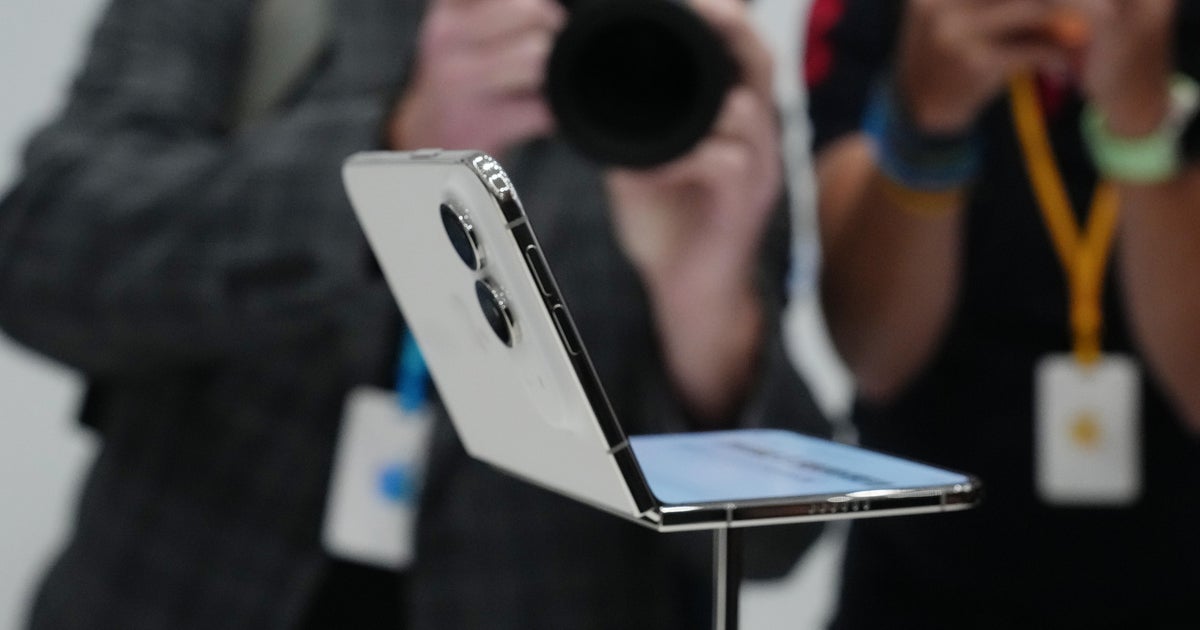
Now attention is turning to the iPhone. Rather than releasing its full lineup at once this fall, Apple is expected to introduce the iPhone 18 Pro and Pro Max alongside its first foldable iPhone, while holding the standard iPhone 18 and refreshed Air until spring 2027, according to Bloomberg. Tim Cook described memory pricing as a ‘100-year flood.’ That leaves Apple’s fall lineup concentrated heavily at the most expensive end of the market—exactly where it has the most room to protect its margins.
Counterpoint’s supply-chain tracking shows Apple preparing roughly 10 percent more iPhone 18 Pro and Pro Max units for September through December than it allocated to the iPhone 17 Pro and Pro Max during the same period last year. On Apple’s last earnings call, the company forecast slower growth due partly to worsening supply constraints, including for memory chips, and said higher memory costs had directly reduced its gross margin. Then-CEO Tim Cook described memory pricing as a ‘100-year flood,’ citing ‘exponential increases’ that had caused Apple to raise prices.
The iPhone 18 Pro could start at $1,299, according to The Wall Street Journal’s calculation based on estimates from TechInsights that factor in component costs and attempt to minimize margin reductions. That would be $200 more than the iPhone 17 Pro. Samsung and Google have each raised the starting prices of some new phones by $100 this year, though several also come with more storage.
Apple may be better positioned than most companies to pull off higher prices. Its installed base, tightly integrated ecosystem, and loyal customers make its phones behave more like luxury goods than interchangeable electronics. The company has already gained market share by keeping its prices steady while lower-end competitors raised theirs.
In places like China—the world’s largest smartphone market—it almost became common sense to opt for a premium iPhone when lower-cost alternatives were selling for nearly as much. For other manufacturers, the options are worse. Counterpoint and IDC are already seeing smartphone companies reduce expected shipments while shifting toward more expensive models.
If they can’t sell as many phones, they can at least try to extract more revenue from each one. That means more OLED displays, AI features, larger memory configurations, and other upgrades that can justify higher prices. As a result, revenue for PCs and smartphones could actually remain flat or even rise as unit sales decline.
In other words, AI isn’t just making electronics cost more. The memory shortage is changing which electronics companies bother making in the first place. Eventually, more supply should arrive.
Samsung, SK Hynix, and Micron are all investing heavily in additional manufacturing. But because new facilities take years to build, that spending won’t bring immediate relief. SK Hynix is investing 600 trillion won in its Yongin Semiconductor Cluster, a massive complex south of Seoul first announced in 2019, and has accelerated its target for completion from 2045 to 2033.
The company says it will double its capacity within five years but still expects demand to outpace supply through 2030. Samsung and SK Hynix also plan to invest a combined 800 trillion won, or about $588 billion, in four new memory-chip factories in southwestern South Korea, according to The Wall Street Journal. Micron’s New York and Idaho projects are part of the more than $250 billion it says it will spend on US manufacturing and research through 2035.
A potentially important fourth player is also emerging in China. CXMT is building additional fabs, though its technology is less advanced.
Source: The Verge