Dubai Weekly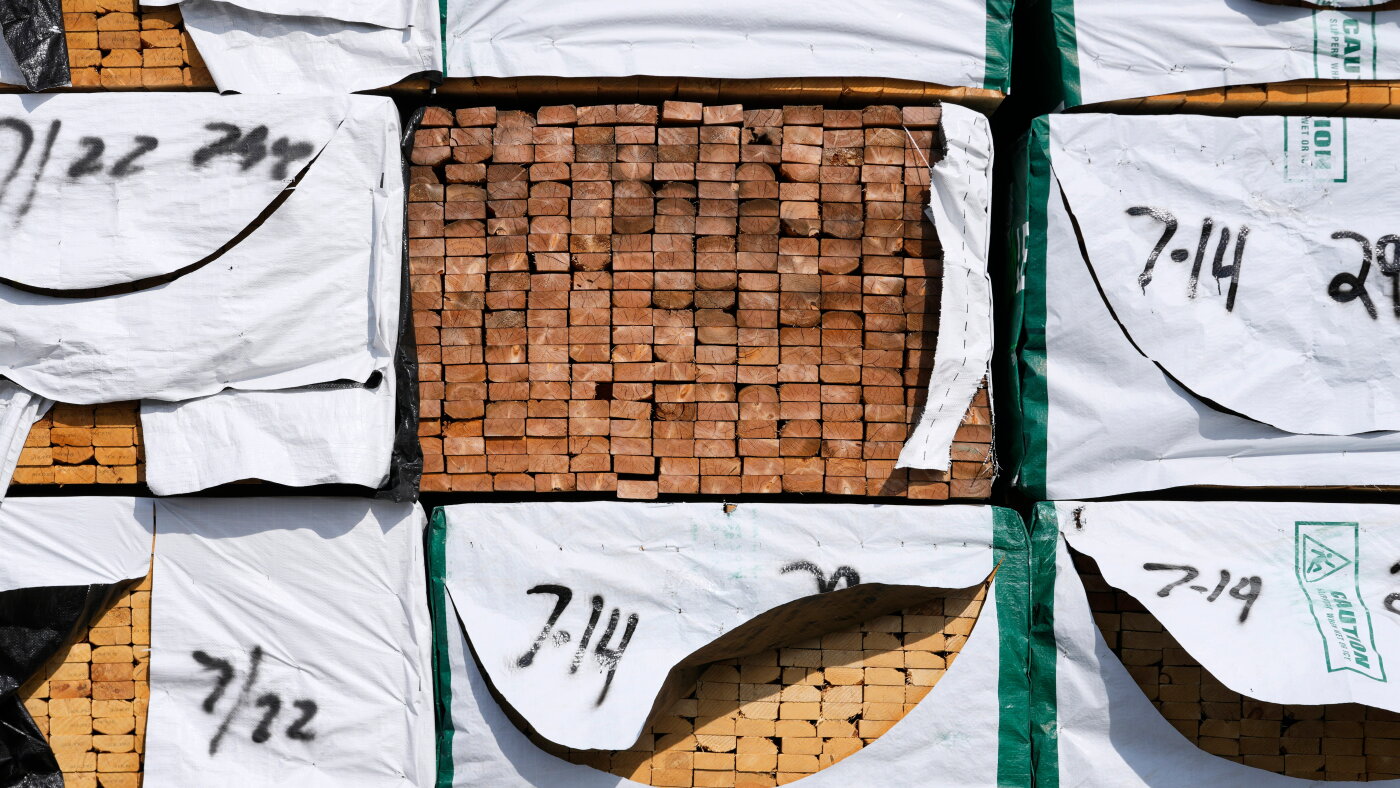
Canadian lumber products are shown at Gutherie Lumber Tuesday, Aug. 25, 2026, in Livonia, Mich. The tariffs hit hundreds of American products, including steel, aluminum, cheese, appliances, clothing, cosmetics, and farm equipment, at rates of 15%, 25%, or 50%. Canada retaliates with tariffs on hundreds of U.S. products, saying its measures match Washington's dollar for dollar and rate for rate.
They take effect at 12:01 a.m. Tuesday under an executive action known as an order in council and cover about $20 billion in American goods, roughly 6% of the $333.6 billion the United States exported to Canada last year. RBC Economics said the measures were unlikely to dent U.S. growth overall but could hit some businesses hard.
Canada has already gone beyond tariffs in other ways: eight of its 10 provinces restrict or ban U.S. alcohol sales, leading to a 70% drop in U.S. spirits exports. Trump threatened to ban the sale of Canadian-made aircraft from Bombardier unless they manufacture planes in the U.S., citing concerns about product quality and U.S. worker employment. Flavio Volpe, president of APMA Canada, responded that Bombardier uses U.S.-made jet engines and employs about 3,000 U.S. workers.
Trump previously warned that Canada's economy could collapse if Prime Minister Carney continued treating him as an enemy. U.S. Trade Representative Jamieson Greer has threatened to ban some Canadian goods outright.
Trump renamed Lake Ontario 'Lake America,' a move ignored and ridiculed in Canada. Google and Apple adjusted their maps for U.S. users under Trump’s pressure. Trump’s trade war and threats to make Canada the 51st state have fueled Canadian anger and support for Carney.
Canadians have cut travel to the U.S. and boycotted U.S. goods. The trade war began after Trump imposed tariffs on Canadian goods, violating the North American trade agreement. Carney has said talks can resume when the U.S. stops using provocative language and becomes serious.
Trump’s pressure has backfired, strengthening Carney’s position. Nelson Wiseman, a political science professor, said Trump’s 2024 reelection has deepened Canadians’ distrust of the U.S. Carney warned at the World Economic Forum that great powers use economic integration to coerce smaller countries, positioning himself as a global voice against Trump.
Trump responded by calling Canada 'dependent,' and Carney will address the European Parliament next week. If Canada’s defiant approach succeeds, it could serve as a model for resisting U.S. trade policies. Trump also threatened 50% tariffs on Canadian vehicles, auto parts, and steel next year, potentially devastating industries reliant on North American supply chains.
Carney warns that such tariffs could leave Canadian industries gradually wound down. Canada’s economy grew at 3.2% annually in the second quarter, outperforming the U.S. at 1.5%, but faces challenges from Trump’s escalating trade pressures. Industry Minister Mélanie Joly expressed confidence that Canada will prevail in the trade war.
Source: NPR