Dubai Weekly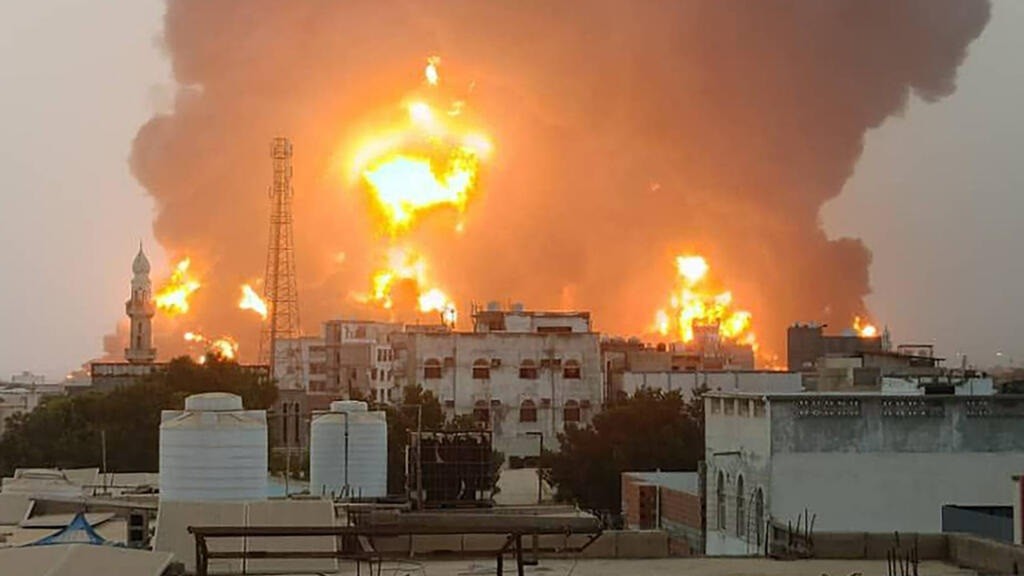
Home Geopolitics Middle East By Charles Kennedy - Sep 17, 2026, 7:00 PM CDT The Houthis are pursuing their own war with Saudi Arabia, seeking control of Yemen’s Red Sea coast while trying to avoid drawing the United States directly into the conflict. Houthi forces have made major territorial gains around Bab el-Mandeb, but several reported attacks on Saudi infrastructure remain unconfirmed, while the damaging East-West pipeline strike originated from Iraq. The wider Middle East supply crisis is hitting U.S. consumers, with gasoline and diesel prices surging as Saudi exports fall and uncertainty over regional oil flows intensifies.
Yemen's Houthis aren't fighting Iran's war, which complicates things further. They're running their own war and letting Iran's war pay for it. Their September 8 demands are the same ones they've held since rejecting a 2023 UN roadmap that would have paid Houthi salaries and given them a share of Yemen's oil and gas revenue.
That roadmap called for an end to Saudi military operations in Yemen, the removal of restrictions on Houthi-controlled ports and airports, back pay for officials, and war reparations. The one operation Iran is confirmed to be directing is the offensive against Mocha and the Hanish Islands , providing arms and guidance, and overseen by IRGC Quds Force commander Abdolreza Shahlai, gives the Houthis what they have wanted forever: control of the coast. The relationship between Iran and the Houthis is such that the Houthis alone will determine how involved they will be in assisting Iran with its own objectives.
Last weekend, US officials met Houthi representatives at the American embassy in Muscat, arranged by Oman, days after the group seized Yemen's Red Sea coastline. The Houthi delegation reportedly told American officials they don't intend to attack US vessels and remain committed to the ceasefire deal reached with Washington in May 2025. There were also reports that the Houthis pledged not to target Israeli or other commercial ships, sparing everyone except Saudi vessels (even though all of this was originally tied to Gaza).
In other words, the Houthis are telling Washington, in writing, that everyone gets a pass except Saudi Arabia. This is a bilateral war with Riyadh that the Houthis are actively insulating from becoming anything broader. Because of that, we might be tempted to think that there is a clean way out of at least the Red Sea blockade in the form of concessions to the Houthis.
However, we see some high-level challenges here, as well. The 2023 Houthi demands are still negotiable, and the Saudis agreed to something close to those at the time. But this war has taken on a life of its own, and this is no longer 2023.
In 2026, Bab el-Mandeb is now a different kind of asset. There is intelligence floating around that the IRGC is directing the design of a Houthi-enforced toll system for Bab el-Mandeb, mirroring Iran's for Hormuz, a claim the Houthis themselves have denied . That means the Saudis have lost some leverage here.
How Much Damage Have the Houthis Really Done? On September 8, Houthi missiles and drones hit oil facilities and utilities across four southern Saudi cities (Abha, Khamis Mushait, Jazan, and Najran), igniting fires, wounding 73 people , and forcing a temporary halt to operations at some sites. The Saudi Energy Ministry confirmed the fires and the shutdown.
That attack came hours after a Saudi coalition strike on the Sanaa airport runway blocked a Houthi-arranged flight from Tehran, and after an earlier Saudi strike killed civilians at a Jawf prison. Everything after September 8 is on weaker ground. The East-West pipeline damage on September 10-11 (the strike that actually moved oil markets) came from drones launched out of Iraq by an Iran-backed militia, not the Houthis.
The Mecca drone on September 16 drove most of this week's coverage, with the Saudis intercepting the drone before it entered restricted airspace over the holy city. The Houthis deny targeting Mecca at all, and Iran has suggested the incident could be a false flag. No independent evidence has surfaced supporting either the Saudi account or the false-flag claim.
Either way, it caused no damage. Separate claims of a strike on Yanbu's export terminal and a second strike on the Khamis Mushait airbase are claimed by Houthis, but there is nothing to substantiate it. Saudi Arabia has confirmed neither.
The Houthis don't have the range or precision to hit Abqaiq themselves. Their weapons reach western and southwestern Saudi Arabia, not the Eastern Province, which is over 1,000 kilometers away. The only strike that ever reached that far, in 2019, was long-range, precision-guided, and ultimately Iran's own weapon , not the Houthis'.
Hitting Abqaiq today would need that same Iranian-grade system, and using one would end the fiction that this is a Houthi-Saudi war rather than an Iranian one. The Houthis are not looking to invite the US into a fight it has so far stayed out of. They have their own agenda.
The Situation on the Ground in Yemen On the ground in Yemen, the Houthi restraint so far has paid off. They've taken Mocha, Perim Island, and the Bab al-Mandeb approaches without pulling the US into the war. In the capital, Sanaa, the Houthi administration is in control.
While there is some burgeoning unrest among populations under their control due to fuel prices , the public has no real voice at the moment and is not much of a threat for the time being. The Houthis are actually running a currency more stable than the internationally recognized government's, not because their economy is healthier, but because they control the exchange mechanism directly. So, the war is popular where it's winning territory and unpopular at the gas pump, but they maintain an authoritarian grip that lets them fight a contained, deniable war against Saudi Arabia.
And in the meantime, the Yemeni government has lost the coast . The unit that lost Mocha to the Houthis was forced to retreat and is now regrouping in Marib, but morale is at an all-time low. Nearly 1,800 families were displaced in the first 48 hours of the fight for Mocha, and that fighting has since spread to four more provinces.
The UAE-backed Southern Transitional Council (STC), a separatist force in southern Yemen, fought the Saudi-backed government for control of the south for years. In January, government and Saudi forces retook Aden, and the STC dissolved itself . There was some internal politics that led to that decision, but the STC is now back, and stepping into the chaos .
For starters, STC forces besieged Saudi Arabia's defense minister during tensions in al-Dhalea. But not every southern faction is moving against the government: Southern Resistance leader Wajdi al-Nakhai called on cells in Aden to integrate temporarily with government forces, specifically because a Houthi offensive was expected. There have also been claims of other STC forces blocking retreating government troops from entering Aden and Lahij after Mocha fell, but we cannot independently confirm that.
The point is, this can't be neatly packaged and adds another variable to the explosive mix in Yemen. Prices at the Pump are Prices at the Pump No one is planning to save Americans from surging prices at the pump. Gas rose from $4.31 to $4.43 nationally in four days this week, according to AAA, and diesel rose 42 cents.
In Charleston, South Carolina, the average jumped 15 cents overnight to $4.08; the statewide average hit $4.11 Thursday, up from $4.05 Wednesday. This traces straight back to supply: Saudi Arabia exported just 3.2 million barrels a day last month , per Kpler data, its lowest level in more than a decade, because both of its normal routes are compromised, making it necessary to sail crude through Suez to the Mediterranean, or fully around Africa via the Cape of Good Hope to reach Asian buyers instead. House Speaker Mike Johnson pulled a vote on suspending the federal gas tax this week, citing disagreement among his own members rather than Democratic opposition.
South Carolina's Republican governor, Henry McMaster, made the same call at the state level, suggesting he didn't think we'd reach emergency levels quite yet. Trump told a rally crowd on Wednesday that high prices at the pump were a small price to pay for the war against Iran. Frighteningly, JPMorgan commodities strategist Natasha Kaneva told clients Thursday that "for the first time since the start of the Iran conflict, we don't have a baseline view" and "we simply don't know how to model the endgame." Where does this wild uncertainty leave midterm elections?
The generic ballot average sits at Democrats +8.3 as of September 13, per Polling USA's model, up from a tighter race before Labor Day. It puts Democrats' likely range at 221 to 263 House seats against Republicans' 172 to 214, a 90-95% probability of a Democratic majority. Republicans hold the House 218-212 with four vacancies, meaning Democrats need to flip only four net seats.
History is already stacked against the incumbent party: only 3 of the last 41 midterm elections have seen the president's party gain seats. Daily Kos reported polling this month showing GOP candidates barely ahead in districts Trump carried by double digits in 2024. Yemen might be a sideshow that looks louder than it is, because the Houthis have no real desire to draw Washington into this fight and aren't fully controlled by Iran or necessarily aligned with its broader agenda.
The attacks on Saudi Arabia may be exaggerated, muddled by claims that go unconfirmed and denials that go unanswered. But for the Trump administration, it's a mess that keeps compounding , one that Americans, and the rest of the world, are footing the bill for in more ways than one. By Charles Kennedy for Oilprice.com More Top Reads From Oilprice.com Germany Weighs Market Incentives to Boost Record Low Gas Storage Level TTF Gas Hits $92.95 as Gulf Tensions Weigh on Energy Markets Ukraine Hits Refinery as Moscow Prepares to Extend Diesel Export Ban Download The Free Oilprice App Today Back to homepage Charles Kennedy Charles is a writer for Oilprice.com More Info Leave a comment EXXON Mobil -0.35 Open 57.81 Trading Vol. 6.96M Previous Vol. 241.7B BUY 57.15 Sell 57.00